

Difficulty Standing Up? Could Be An Early Warning Sign for Falls
If getting out of a chair feels slower, effortful, or wobbly, your body may be signaling that key systems for balance and mobility (leg strength, power, and coordination) need attention. For adults 60+, trouble with sit-to-stand is more than an inconvenience: it’s linked with a higher risk of future disability, falls, fractures, and even mortality.
Why Sit-to-Stand Matters
Standing up from a chair combines several abilities we rely on all day: ankle and hip mobility, lower-body strength, core control, and balance. Research shows that simple chair-stand tests (like five repetitions as fast as possible, or the number of stands in 30 seconds) are practical “vital signs” for functional capacity in older adults. Poor performance on these tests is associated with later disability and falls.
Better yet, training the movement itself helps. A 2023 randomized controlled trial found that sit-to-stand–based training performed a few times per week improved muscle function and produced favorable muscle adaptations in sedentary adults, confirming this is a time-efficient, low-cost way to build capacity.
A Quick At-Home Self-Check (30-Second Chair Stand)
You can screen yourself safely at home:
Use a standard chair (about 17″ high) without armrests.
Cross arms over the chest, feet flat, back straight.
On “Go,” stand fully and sit back down repeatedly for 30 seconds.
Count completed stands. Stop if you feel pain, severe dizziness, or unsafe.
Your number is a functional snapshot of leg strength and endurance. Track it monthly; improving or maintaining your score is the goal. A licensed clinician can interpret your result in the context of age and sex-specific reference values and your medical history.
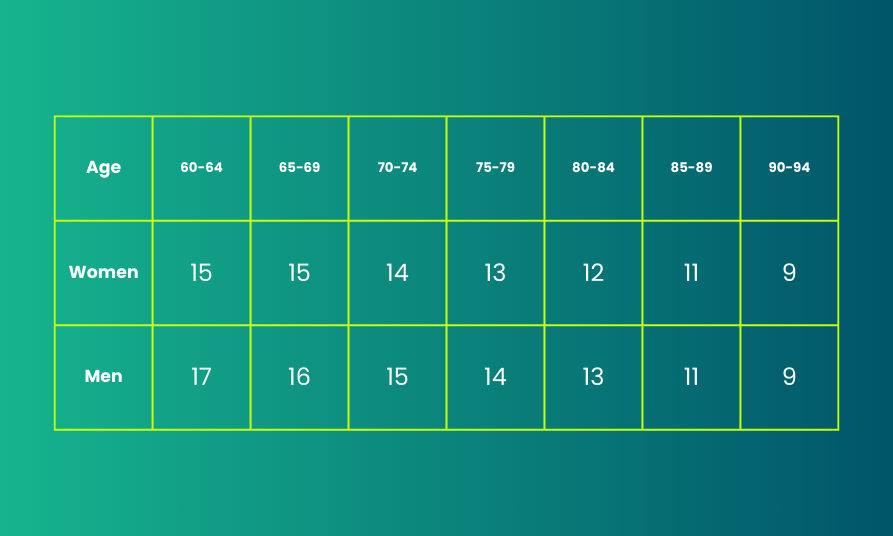
Cut-off Scores
What “Hard to Stand Up” Is Really Telling You
Leg strength and power are lagging. The quadriceps and glutes do most of the work; weakness slows the rise and increases sway.
Reactive balance is challenged. If you rock or push off your thighs, your system is compensating for limited strength or control.
Cognition can play a role. Large population data link slower chair-stand performance with lower cognitive function—another reason to screen early and often.
How Physical Therapy Helps
A targeted program can turn this early warning sign into a success story:
Strength & Power Training (2–3x/week): Progressive sit-to-stands, box or counter-height squats, step-ups, and resisted hip work rebuild the engine that stands you up. Evidence supports sit-to-stand training itself for improving muscle function.
Balance & Transfer Practice: Task-specific drills (varying chair heights, foot positions, or adding a light carry) improve real-world confidence and reduce fall risk.
Mobility Where It Counts: Ankle dorsiflexion, hip extension, and thoracic mobility reduce compensations and make rising smoother.
Cognition-Friendly Cues: Simple external cues and dual-task progressions (e.g., counting reps aloud) reinforce safe patterns while engaging attention.
At PerformanceAbove, we assess your chair-stand mechanics, strength, balance, and gait, then build a plan that meets you where you are, whether your goal is independent living, confident stair use, or getting back on the course.
Safe Starter Progressions
Always use a sturdy chair, wear supportive shoes, and keep a countertop or stable surface nearby. Stop if pain or dizziness occurs.
Rock-Back Sit-to-Stand: Scoot forward, feet under knees. Lean chest slightly over toes, then stand; control the sit. 2–3 sets of 6–10 reps.
Assisted Sit-to-Stand: Light fingertip support at the counter as needed; aim to reduce assistance over time. 2–3 sets of 8–12 reps.
Tempo Sit-to-Stand: Three-second lower, quick rise. Builds control (eccentric strength) and power.
Step-Ups (low box/stair): Drive through the whole foot; control the down phase. Start with 6–8 reps/side.
Re-check your 30-Second Chair Stand monthly to see progress. Many patients add 2–4 reps within a few weeks of consistent training.
When to Seek Help
You need your hands to push up from most chairs.
Standing up is painful, very slow, or feels unsafe.
You’ve had a recent fall, near-fall, or new fear of falling.
Your 30-second score isn’t improving after 4–6 weeks of practice.
These are great reasons to get a movement assessment. Evidence shows that structured sit-to-stand practice and lower-limb strengthening improve muscle quality and functional performance, key ingredients for fall prevention.
Ready to Lower Your Fall Risk?
Book a Fall & Mobility Assessment. We’ll measure your chair-stand baseline, balance, and gait, then build an individualized program to make standing up (and staying up) feel strong, steady, and safe.
Blog Resources:
Lizama-Pérez, R., García-Roja, C., Araya, J., Peñailillo, L., & Díaz, V. (2023). Effect of sit-to-stand-based training on muscle quality in sedentary adults: A randomized controlled trial. PeerJ, 11, e15665.
Kiyama, R., Makizako, H., Tabira, T., Takenaka, T., Eto, M., & Kubozono, T. (2022). Reference values of chair stand test and associations of chair stand performance with cognitive function in older adults. Aging and Health Research, 2(3), 100090.
Shirley Ryan AbilityLab. (2013, last updated). 30 Second Sit to Stand Test (30CST). RehabMeasures Database.
Not all exercises are for everyone. Before attempting a new exercise, take into account factors such as flexibility, strength, and overall health to determine whether a particular exercise is appropriate for you.
This, like any other exercise, can result in personal injury. Any injury sustained from proper or improper use of this exercise is solely the responsibility of the exerciser. Performanceabove LLC disclaims any liability from injury sustained from the use of this exercise and suggests that you consult your professional healthcare provider before attempting any exercise or exercise program.
